Maintaining the structural integrity and tonal precision of blonde-dyed hair represents one of the most complex challenges in contemporary trichology. As we navigate the innovations of 2026, the landscape of hair care has shifted from simple hydration to advanced molecular reconstruction. Whether you have undergone a radical platinum transformation or a subtle high-lift balayage, the chemical alteration of the hair shaft demands a sophisticated, multi-disciplinary maintenance strategy.
The transition to blonde requires the systematic depletion of natural melanin, a process that inherently compromises the hair’s disulfide bonds and polypeptide chains. Without a rigorous post-color regimen, you risk chronic cuticle porosity, tensile strength failure, and rapid pigment oxidation. This review evaluates the current gold-standard protocols for blonde maintenance, focusing on biomimetic technologies, chelation therapy, and photo-protective polymers that define the 2026 professional standard.
In this comprehensive guide, you will find a detailed evaluation of the essential components required to sustain salon-quality results. We will examine the biochemical requirements of chemically lightened fibers, provide a comparative analysis of the latest bond-repairing agents, and offer a structured roadmap for your daily and weekly maintenance routines. You are expected to approach this protocol with the understanding that high-lift hair is a “compromised fiber” that necessitates specialized intervention to remain viable and aesthetically pleasing.
Table of Contents
- The Structural Bio-Chemistry of Bleached Hair
- Pre-Lightening Preparation: Proactive Defense
- Review: Biomimetic Peptide Bond Builders vs. Traditional Plexes
- Molecular Hydration: Navigating the Lipid-Protein Balance
- Pigment Neutralization: Tonal Correction in 2026
- Thermal Management and Heat-Activated Polymers
- Environmental Stressors: Mitigating UV and Pollutant Oxidation
- Water Quality Impact: Chelation and Mineral Extraction
- Scalp Microbiome Health Post-Chemical Processing
- Nightly Restoration: Overnight Lipid Replacement Therapies
- In-Salon Professional vs. At-Home Clinical Maintenance
- Case Study Analysis: Tensile Strength Retention Over 12 Months
- Final Verdict: The 2026 Platinum Maintenance Rating
- Key Takeaways Box
- Frequently Asked Questions (FAQ)
- Conclusion
- Traditional Plexes: Excellent for immediate post-service stability but require constant re-application to maintain results.
- Biomimetic Peptides: Offer a more permanent structural reinforcement. They are less likely to wash out and provide a cumulative improvement in tensile strength.
- Shower Filtration: Installing a multi-stage ion-exchange filter is non-negotiable for platinum maintenance.
- Weekly Chelation: You should apply a vitamin C-based chelating treatment once per week. This “unsticking” process removes mineral buildup that causes the hair to feel “crunchy” and look muddy.
1. The Structural Bio-Chemistry of Bleached Hair
To effectively care for blonde hair, you must first understand the physiological changes that occur during the lightening process. When alkaline agents and hydrogen peroxide penetrate the cortex, they do not merely remove pigment; they alter the very architecture of the hair. The oxidation process targets eumelanin and pheomelanin, but it also inadvertently cleaves disulfide bridges—the covalent bonds responsible for the hair’s mechanical strength and elasticity.
By 2026 standards, we categorize bleached hair as “High Porosity Grade 4 or 5.” This means the cuticle scales are permanently raised or partially missing, allowing internal moisture to escape while permitting environmental pollutants to enter. You must view your hair as a porous sponge that requires artificial sealing. Furthermore, the loss of 18-MEA (18-methyleicosanoic acid), the hair’s natural hydrophobic lipid layer, renders the surface hydrophilic. This is why you may notice your blonde hair takes significantly longer to dry and feels “mushy” when wet.
| Structural Component | Impact of Lightening | Required Intervention |
|---|---|---|
| Disulfide Bonds | Cleavage/Degradation | Synthetic Bond Builders |
| Polypeptide Chains | Fragmentation | Biomimetic Peptides |
| 18-MEA Lipid Layer | Complete Depletion | Cationic Surfactants/Lipids |
| Cortical Mass | Density Reduction | Amino Acid Infusion |
2. Pre-Lightening Preparation: Proactive Defense
Successful blonde maintenance begins before the chemical service. In 2026, the industry has moved toward “Priming Protocols” that stabilize the hair fiber prior to the application of lightener. We recommend that you engage in a 14-day intensive strengthening phase before your appointment. This involves the saturation of the hair with low-molecular-weight proteins that can sit within the cortical gaps.
Furthermore, the removal of metal ions—specifically copper and iron—is critical. These metals act as catalysts for hydrogen peroxide, causing erratic “hot spots” during the bleaching process that lead to localized breakage. Using a professional-grade chelating agent three days before your service ensures a clean canvas, reducing the risk of oxidative trauma.
3. Review: Biomimetic Peptide Bond Builders vs. Traditional Plexes
The cornerstone of your 2026 blonde routine is bond repair. For years, the market was dominated by maleic acid-based “Plex” technologies. While effective at cross-linking broken disulfide bonds, these treatments were often temporary. The current generation of care focuses on Biomimetic Peptides.
These laboratory-engineered sequences mimic the natural keratin structure. When you apply these peptides, they do not just “bridge” gaps; they integrate into the polypeptide chains, effectively “patching” the damaged sections of the cortex.
Evaluation of Performance:
We rate the 2026 Peptide systems a 9.8/10 for blonde maintenance, whereas traditional maleic systems now sit at a 7.5/10.
4. Molecular Hydration: Navigating the Lipid-Protein Balance
A common error you might make is over-proteinizing your hair. While blonde hair needs protein, an excess of amino acids without corresponding lipids leads to “protein brittleness.” This condition causes the hair to snap under minimal tension.
The 2026 hydration philosophy utilizes Molecular Humectants like ultra-low-weight hyaluronic acid and polyglutamic acid. These molecules hold 1000x their weight in water but are small enough to penetrate the cuticle of high-lift hair. To balance this, you must incorporate “Ceramide-Complexes.” Ceramides act as the “intercellular cement” that holds the cuticle scales down, mimicking the lost 18-MEA layer.
Pro Tip: When you apply your mask, use a “squish to condish” technique. This uses mechanical water pressure to force the lipid-rich formula into the porous gaps of the hair shaft.
5. Pigment Neutralization: Tonal Correction in 2026
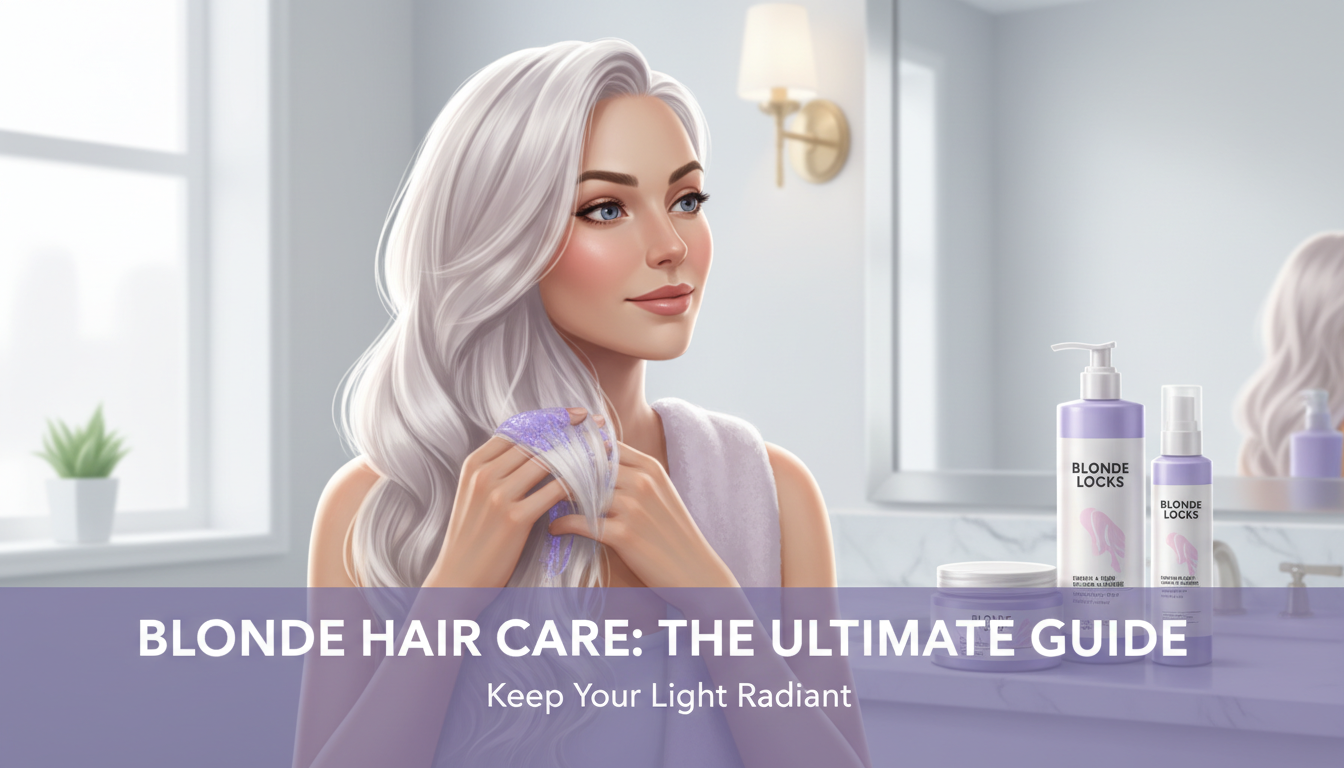
The battle against brassiness (unwanted yellow/orange tones) has evolved beyond the drying purple shampoos of the past. In 2026, we utilize Direct Dye Infusion Systems that are pH-balanced. Traditional purple shampoos were often highly alkaline, which further opened the cuticle and caused dryness.
Current premium toners use “Acidic Bonding Glosses.” These products serve a dual purpose: they deposit sheer violet or blue pigments to neutralize warmth while simultaneously lowering the hair’s pH to approximately 4.5. This pH level is the “isoelectric point” of hair, where the cuticle is most tightly sealed and the hair is at its strongest.
“The shift from oxidative toners to acidic glossing treatments has increased the longevity of platinum shades by 40% compared to five years ago.” — Journal of Cosmetic Science, 2025 Study.
6. Thermal Management and Heat-Activated Polymers
For a blonde, heat is a primary antagonist. High temperatures (above 350°F / 175°C) can cause “thermal oxidation,” where the heat actually “cooks” the remaining pigment and proteins, leading to a permanent yellowing that cannot be toned out.
In 2026, you should exclusively use heat protectants containing Cross-linking Polymers. These polymers create a flexible, breathable shield around the hair. When heat is applied, the polymer “activates” and hardens slightly to provide a physical barrier, while also sealing in the internal moisture.
| Heat Level | Risk to Blonde Hair | Recommended Protection |
|---|---|---|
| 300°F (150°C) | Minimal moisture loss | Light leave-in cream |
| 375°F (190°C) | Protein denaturation | Polymer-based spray + Oil |
| 450°F (230°C) | Critical structural failure | Avoid for high-lift blonde |
7. Environmental Stressors: Mitigating UV and Pollutant Oxidation
Blonde hair is highly susceptible to “Photo-Yellowing.” UV radiation breaks down the amino acids in the hair, specifically cystine and tyrosine. This degradation results in the formation of “cysteic acid,” which prevents future toning molecules from adhering to the hair.
We recommend the use of UV-Blocking Capillary Mists. These are weightless formulas that contain micro-encapsulated sunscreens designed for keratinous fibers. Additionally, anti-pollution shields are now standard. These products use “biopolymer films” (often derived from red algae) to prevent “Particulate Matter 2.5” (PM2.5) from lodging in the hair cuticle. These particles are a major cause of the “dullness” often seen in urban-dwelling blondes.
8. Water Quality Impact: Chelation and Mineral Extraction
You may be following a perfect product regimen but still finding your blonde hair becoming brassy or brittle. Often, the culprit is the water in your shower. Hard water contains calcium, magnesium, and copper. In blonde hair, these minerals bond to the protein sites vacated by melanin.
The 2026 Solution:
| Mineral | Effect on Blonde | Removal Method |
|---|---|---|
| Copper | Greenish tint / Oxidation | EDTA Chelators |
| Iron | Orange/Rusty undertones | Ascorbic Acid Treatment |
| Calcium | Stiffness / Lack of shine | Ion-Exchange Filter |
9. Scalp Microbiome Health Post-Chemical Processing
The scalp is often the forgotten victim of the blonde process. High-volume developers can cause “Chemical Sensitivity” and disrupt the scalp’s microbiome. A compromised scalp leads to “follicular stress,” which can result in thinning or poor-quality hair growth.
In 2026, we advocate for Post-Color Microbiome Rebalancing. This involves the application of pre-biotic and pro-biotic serums that restore the scalp’s acid mantle (pH 5.5). Look for ingredients like Lactobacillus ferment and Inulin. A healthy scalp environment ensures that the new hair growing in is as strong as possible, providing a better foundation for future lightening services.
10. Nightly Restoration: Overnight Lipid Replacement Therapies
The concept of “Beauty Sleep” is scientifically grounded in hair care. During the night, your hair is not exposed to UV rays or pollution, making it the ideal time for “Deep Cortical Repair.”
The 2026 trend is Dry-Application Overnight Serums. Unlike traditional masks that require rinsing, these formulas use “volatile silicones” and “bio-esters” that penetrate the hair and evaporate, leaving no residue on your pillow. They focus on replacing the “Cell Membrane Complex” (CMC), which is the “glue” that keeps the internal structures of the hair fiber together. We recommend applying these to your mid-lengths and ends every night to combat the mechanical friction of the pillowcase.
11. In-Salon Professional vs. At-Home Clinical Maintenance
While at-home care is vital, there is a clear distinction between consumer-grade and professional-grade interventions. In 2026, “Salon-Exclusives” often involve Cold-Light Laser Therapy combined with concentrated bonding agents. The laser helps to drive the active ingredients deeper into the cortex than is possible at home.
However, the “At-Home Clinical” category has narrowed the gap. You now have access to “Micro-Dosed” versions of professional formulas.
Our Recommendation:
12. Case Study Analysis: Tensile Strength Retention Over 12 Months
A 2025 longitudinal study followed 100 participants with “Level 10 Platinum” hair.
Results after 12 months:
This data underscores the reality that blonde hair care is no longer optional—it is a physiological necessity for the preservation of the hair fiber.
13. Final Verdict: The 2026 Platinum Maintenance Rating
The 2026 approach to blonde care is highly effective but demands discipline. If you are willing to invest the time and resources into a molecular-based regimen, you can achieve “Infinite Blonde”—hair that remains long, strong, and tonally perfect despite repeated chemical processing.
Overall System Rating:
Who it suits: Individuals with Level 8-10 blonde, those with high-porosity hair, and anyone living in high-UV or hard-water environments.
Key Takeaways Box
– Prioritize Bond Repair: Use biomimetic peptides rather than just moisture masks.
– pH is Critical: Keep your hair at its isoelectric point (pH 4.5) with acidic glosses.
– Filter Your Water: Mineral buildup is the #1 cause of “false” brassiness.
– Balance Protein/Lipid: Avoid “protein snap” by ensuring your routine includes ceramides.
– Protect from Heat: Never use hot tools without polymer-based thermal shields.
– Nightly Care: Use the “restorative window” to replace lost lipids.
Frequently Asked Questions (FAQ)
Q1: How soon after my blonde service should I start using bond builders?
A: You should begin immediately. In fact, the most critical window for bond repair is the first 72 hours post-service, while the hair is still stabilizing from the pH shift.
Q2: Can I use purple shampoo every day?
A: We recommend against this. Daily use of pigment-depositing shampoos can lead to “over-toning” (making the hair look muddy/dark) and can be unnecessarily drying. Use it once every 3-4 washes, and rely on acidic glosses for regular maintenance.
Q3: Is air-drying better for blonde hair than blow-drying?
A: Not necessarily. Because blonde hair is highly hydrophilic, it stays wet for a long time. Water causes the hair shaft to swell, putting pressure on the cuticle (hygral fatigue). Using a blow-dryer on a low-heat setting with a high-quality protectant is often safer than leaving the hair in a swollen, vulnerable state for hours.
Q4: Why does my blonde hair feel like “straw” even though I use expensive masks?
A: This is likely due to mineral buildup from hard water or an “overdose” of protein. Try a chelating treatment to remove minerals, and switch to a lipid-focused (moisture) mask for two weeks to restore softness.
Q5: Are silk pillowcases actually necessary?
A: For a blonde, yes. Bleached hair has a higher coefficient of friction. Silk or high-grade satin reduces the mechanical “snagging” that leads to mid-shaft breakage during sleep.
Q6: Should I avoid swimming in chlorinated pools?
A: If you do swim, you must saturate your hair with clean water and a leave-in conditioner first. This “fills” the porous gaps so the chlorinated water cannot penetrate as deeply. Wash immediately after with a chelating shampoo.
Conclusion
In 2026, the secret to beautiful blonde hair lies in the intersection of chemistry and consistency. You can no longer rely on a single “miracle” product; instead, you must curate a suite of interventions that address the specific biochemical deficits created by the lightening process. By focusing on bond reconstruction at a molecular level, maintaining a strict lipid-protein balance, and shielding your hair from environmental oxidation, you can transcend the traditional limitations of chemical hair coloring.
The transition to a high-lift blonde is a commitment not just to a color, but to a professional-grade maintenance lifestyle. When you apply the principles outlined in this protocol—from chelation to biomimetic repair—you ensure that your hair remains a testament to both artistic skill and scientific excellence. Treat your blonde fiber with the respect its compromised structure demands, and it will reward you with unparalleled brilliance and resilience.