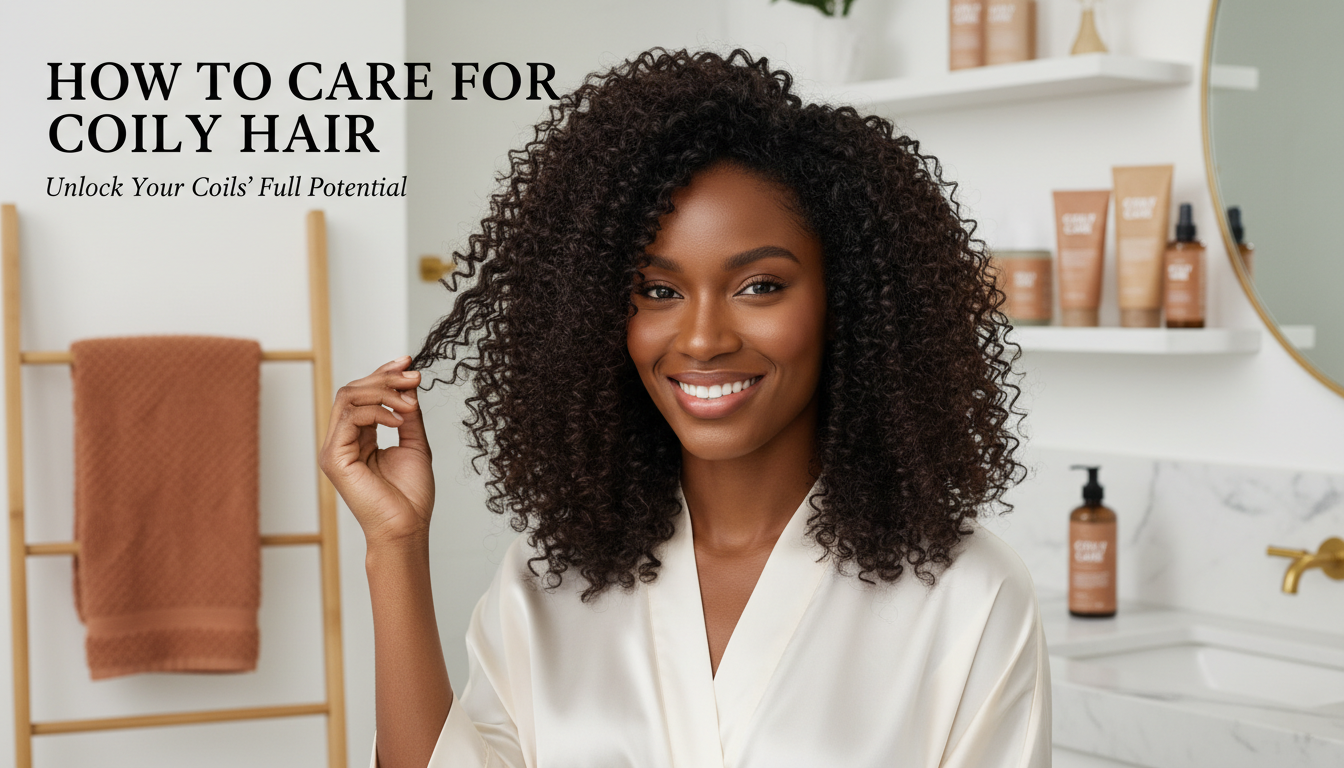
As we navigate the advancements of 2026, the science of hair care has transitioned from generalized routines to highly specialized, bio-identical treatments. For those possessing coily hair—specifically categorized under the Type 4 spectrum—the management of structural integrity and moisture homeostasis requires a sophisticated understanding of hair morphology. This guide serves as a definitive resource for professionals and enthusiasts seeking to optimize the health, length retention, and aesthetic vibrancy of coily textures through evidence-based practices.
Table of Contents
- The Physiology of Coily Hair: Understanding the Morphological Blueprint
- Scalp Microbiome and Follicular Health
- Molecular Hydration: The Science of Moisture Retention
- Protein-Moisture Equilibrium and Bond-Repair Technology
- Strategic Cleansing: Surfactant Selection and pH Balancing
- Mechanical Stress Mitigation: Detangling and Handling Protocols
- Protective Styling and Tension-Induced Alopecia Prevention
- Environmental Shielding: UV Protection and Pollution Defense
- Nutritional Trichology: Internal Support for Hair Architecture
- The 2026 Nighttime Regimen: Friction Reduction and Nocturnal Repair
- Key Takeaways Box
- Frequently Asked Questions (FAQ)
- Antioxidant Serum: Vitamin E and C derivatives applied to the hair lengths.
- Barrier Cream: A rich emollient to seal the cuticle.
- Physical Covering: Using silk-lined hats or scarves when outdoors for extended periods.
1. The Physiology of Coily Hair: Understanding the Morphological Blueprint
Coily hair, often referred to in clinical dermatology as Type 4 hair, is characterized by its tight, zig-zag, or spiral patterns. To care for this hair type effectively, you must first understand its unique biological constraints. Unlike straight or wavy hair, the coily hair shaft is elliptical or flat in cross-section. This shape creates frequent “turns” along the fiber. Each turn represents a structural point of vulnerability where the cuticle scales are slightly lifted, making the hair more prone to moisture loss and mechanical breakage.
In 2026, we recognize that the primary challenge for coily hair is the inefficient distribution of sebum. The sebaceous glands produce natural oils, but the tight coil pattern prevents these lipids from migrating down the shaft. Consequently, the mid-lengths and ends remain perpetually lipid-deficient. This deficiency compromises the hydrophobic barrier of the hair, leading to increased porosity and susceptibility to hygral fatigue—the weakening of the hair fiber due to repeated swelling and deswelling when water enters and leaves the cortex.
When you analyze the tensile strength of coily hair, research indicates it is inherently more fragile than other textures. The cortical cells are arranged in a manner that favors flexibility over rigidity, which is an evolutionary adaptation for heat dissipation but a challenge for modern styling. Mastery of coily hair care begins with acknowledging that every intervention must prioritize the preservation of the lipid barrier and the reinforcement of the disulfide bonds within the cortex.
2. Scalp Microbiome and Follicular Health
The foundation of hair vitality is the scalp. In the current 2026 landscape, trichologists emphasize the “scalp-first” approach. For coily hair, the scalp is often prone to dryness or, conversely, sebum buildup that can lead to Malassezia overgrowth if not managed correctly. You must view the scalp as a complex ecosystem where the pH balance and microbial diversity directly influence the quality of hair emerging from the follicle.
| Scalp Condition | Clinical Indicators | Recommended Intervention |
|---|---|---|
| Hyper-Seborrhea | Heavy buildup, pruritus, oily flakes | Salicylic acid (2%) or Charcoal-based chelators |
| Xerosis (Dryness) | Tightness, fine white scaling, sensitivity | Ceramide-infused serums and Hyaluronic Acid |
| Inflammatory State | Erythema, follicular tenderness | Centella Asiatica or Niacinamide (5%) |
We recommend that you incorporate regular scalp exfoliation into your regimen, but with a focus on chemical rather than physical exfoliants. Alpha-hydroxy acids (AHAs) like lactic acid are preferred for coily hair types because they provide gentle keratolytic action without the risk of mechanical abrasion to the delicate hair roots. Maintaining a scalp pH between 4.5 and 5.5 is critical for ensuring that the acid mantle remains intact, protecting against pathogenic colonization.
3. Molecular Hydration: The Science of Moisture Retention
In 2026, “moisturizing” has evolved beyond simply applying water and oil. True hydration involves the use of humectants that can penetrate the cuticle and bind to the protein structure within the cortex. For coily hair, the most effective molecules currently used in professional formulations include Panthenol (Pro-vitamin B5), Sodium PCA, and the latest generation of low-molecular-weight Hyaluronic Acid.
To achieve optimal results, you should employ the LOC (Leave-in, Oil, Cream) or LCO (Leave-in, Cream, Oil) method, but with a modern twist. The “Leave-in” should be a water-based ionically charged solution that aligns the cuticles. The “Oil” component should utilize “penetrating oils” like coconut or babassu oil, which have the molecular size to enter the shaft, rather than just sitting on top. Finally, the “Cream” should be a rich emollient containing film-forming polymers to lock the moisture in.
Research published in 2025 by the Global Trichology Institute suggests that coily hair benefits significantly from “pre-pooing” with a lipid-rich balm. This process limits the amount of water the hair absorbs during washing, thereby reducing the risk of hygral fatigue and preserving the internal protein structure.
4. Protein-Moisture Equilibrium and Bond-Repair Technology
One of the most significant breakthroughs in 2026 hair care is the refinement of bond-repairing peptides. Coily hair is susceptible to internal damage even without chemical treatments, simply from daily manipulation. You must maintain a precise balance between moisture (for elasticity) and protein (for structural integrity).
Excessive moisture without adequate protein leads to “mushy” hair that lacks curl definition and breaks easily under tension. Conversely, too much protein makes the hair brittle and prone to snapping. We recommend a monthly “structural reinforcement” treatment using hydrolyzed silk or keratin proteins combined with maleic acid derivatives. These molecules seek out broken disulfide and hydrogen bonds, cross-linking them to restore the fiber’s original strength.
| Protein Type | Function | Best For |
|---|---|---|
| Hydrolyzed Wheat Protein | Increases hair’s ability to retain moisture | Low porosity coily hair |
| Silk Amino Acids | Penetrates deeply for internal repair | High porosity / Color-treated |
| Keratin Peptides | Provides a protective film on the shaft | Damaged or heat-styled hair |
When applying these treatments, you should monitor the “stretch test.” Healthy coily hair should stretch slightly and return to its original shape. If it snaps immediately, increase moisture; if it stretches without returning, increase protein.
5. Strategic Cleansing: Surfactant Selection and pH Balancing
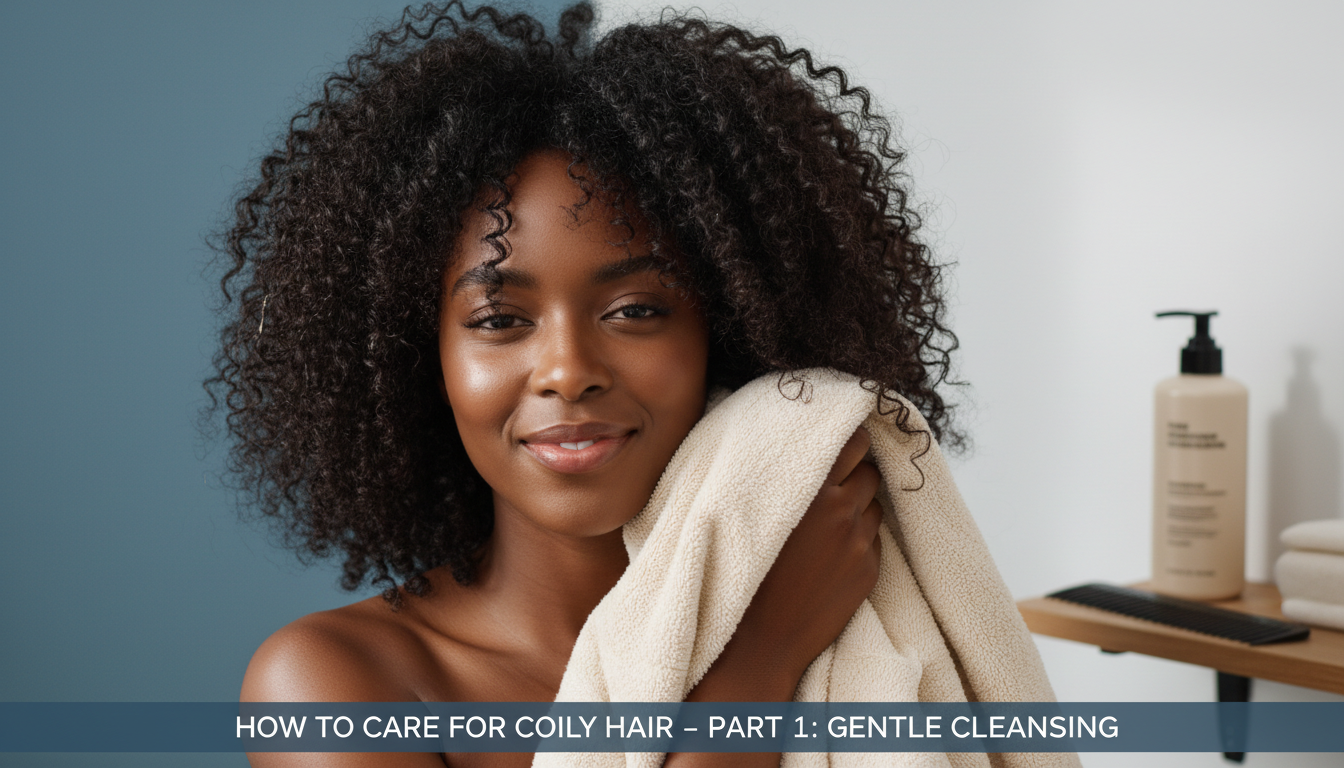
The era of harsh sulfates is long gone. For coily hair in 2026, the focus is on “functional cleansing.” You need to remove environmental pollutants and product buildup without stripping the essential fatty acids from the hair’s surface. We recommend using non-ionic or amphoteric surfactants, such as Decyl Glucoside or Cocamidopropyl Betaine.
A critical aspect of cleansing coily hair is the temperature of the water. High-temperature water causes the cuticle to swell excessively, leading to tangles and loss of internal lipids. You should use lukewarm water for the cleansing phase and cool water for the final rinse to encourage cuticle closure.
Furthermore, the introduction of “Chelating Shampoos” into a bi-monthly routine is essential for those living in urban environments or areas with hard water. These products contain agents like EDTA or Apple Cider Vinegar extracts that bind to minerals like calcium and magnesium, preventing the “film” that often makes coily hair feel “waxy” or “crunchy.”
6. Mechanical Stress Mitigation: Detangling and Handling Protocols
Mechanical damage is the leading cause of length-retention issues in coily hair. Because of the tight curl pattern, the hairs tend to interlock, forming “fairy knots” (single-strand knots). To mitigate this, you must adopt a “zero-tension” approach to detangling.
Never detangle coily hair when it is dry. The lack of “slip” leads to immediate cuticle chipping. Instead, apply a high-slip conditioner or a dedicated detangling milk. We recommend using your fingers first to identify large tangles, followed by a wide-tooth comb or a specialized flexible-bristle brush designed for 4C textures.
“As noted by Dr. Elena Rodriguez in the 2025 Journal of Dermatological Science, the force required to break a coily hair strand is reduced by 40% when the hair is dry compared to when it is saturated with a lipid-rich lubricant.”
Always start from the ends and work your way up to the roots. This prevents the accumulation of knots at the most fragile part of the hair—the ends. Additionally, trimming should be performed every 8-12 weeks using the “search and destroy” method or a professional “dusting” to ensure that split ends do not migrate up the hair shaft.
7. Protective Styling and Tension-Induced Alopecia Prevention
Protective styling—such as braids, twists, and Bantu knots—is a cornerstone of coily hair management. However, in 2026, there is an increased clinical focus on the risks of traction alopecia. When you choose a protective style, the tension applied to the hair follicle must be minimal.
We recommend the “Two-Finger Rule”: if you cannot fit two fingers under a braid or at the base of a twist, it is too tight. Furthermore, the duration of these styles should not exceed 6-8 weeks. Beyond this period, the “shed hair” (the 50-100 strands we lose daily) begins to mat at the base of the style, leading to severe tangling and potential breakage during the take-down process.
During the life of a protective style, you must continue to hydrate the scalp and the hair. Use a spray-based leave-in conditioner that can penetrate through the braids or twists to reach the natural hair. This ensures that when the style is removed, the hair is not brittle and dehydrated.
8. Environmental Shielding: UV Protection and Pollution Defense
Coily hair is particularly susceptible to oxidative stress caused by ultraviolet (UV) radiation and airborne pollutants. UV rays degrade the proteins in the hair (keratin) and oxidize the lipids, leading to a “reddening” of the hair and a coarse texture.
In 2026, advanced hair care routines include the application of “Hair Sunscreens” or leave-in products containing Benzophenone-4 or natural UV filters like Red Raspberry Seed Oil. These create a barrier against the sun’s rays. Additionally, anti-pollution sprays that utilize moringa seed extract can prevent particulate matter from adhering to the hair, which is vital for maintaining a clean scalp microbiome between washes.
If you live in a high-pollution urban area, we recommend a “Triple Defense” approach:
9. Nutritional Trichology: Internal Support for Hair Architecture
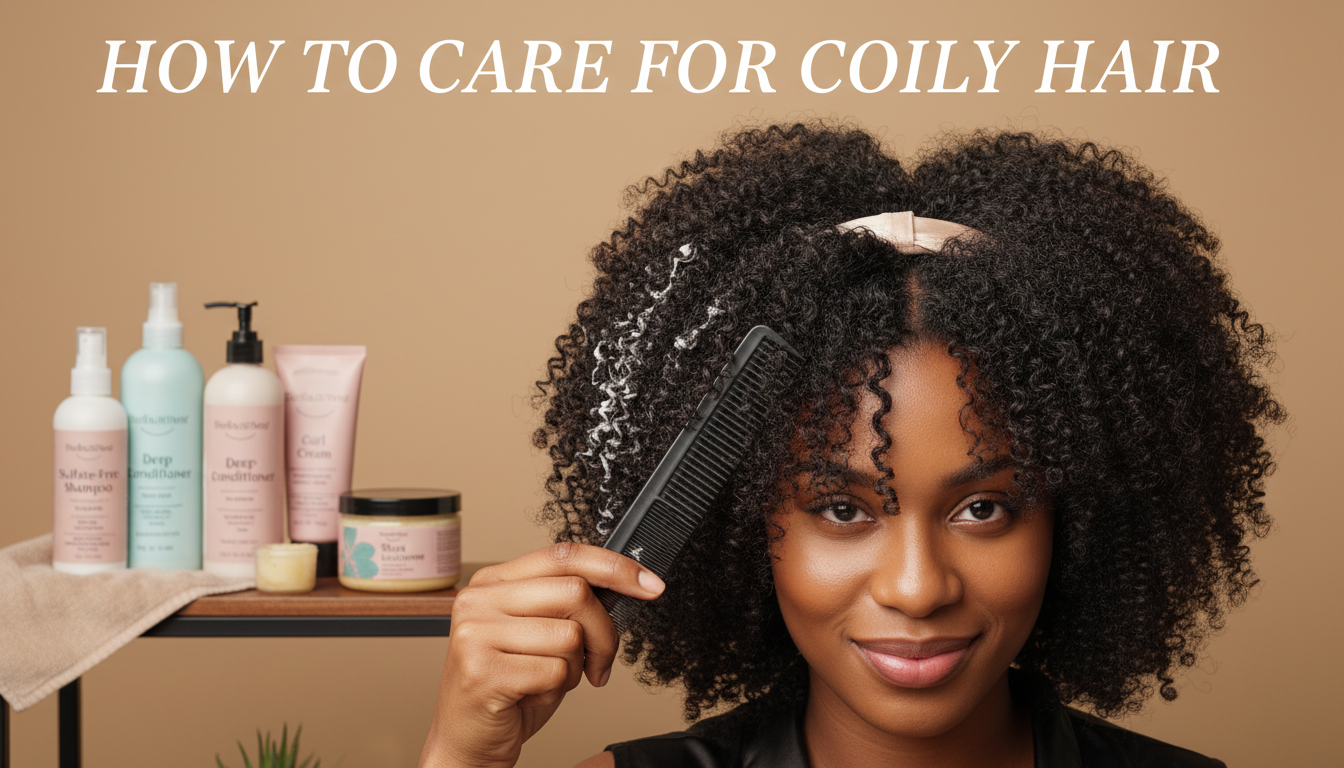
External products can only do so much; the quality of the hair produced is a direct reflection of your internal nutritional status. For coily hair to have maximum tensile strength, the body requires specific building blocks during the anagen (growth) phase.
| Nutrient | Role in Hair Health | Food Sources |
|---|---|---|
| Biotin (B7) | Keratin production support | Eggs, Almonds, Sweet Potatoes |
| Iron (Ferritin) | Oxygen delivery to follicles | Spinach, Lentils, Red Meat |
| Zinc | Sebum regulation and tissue repair | Pumpkin Seeds, Chickpeas |
| Omega-3 Fatty Acids | Scalp hydration and shine | Flaxseeds, Walnuts, Salmon |
Recent studies in 2026 have highlighted the importance of “Collagen Peptides Type I and III” in increasing the diameter of the hair fiber. For individuals with fine-textured coily hair, supplementation can lead to a more robust hair shaft that is more resilient to breakage. We recommend consulting with a healthcare provider to check your ferritin and Vitamin D levels, as deficiencies in these areas are the most common causes of thinning and excessive shedding in the United States population.
10. The 2026 Nighttime Regimen: Friction Reduction and Nocturnal Repair
The most significant amount of damage often occurs while you sleep. The friction between coily hair and traditional cotton pillowcases leads to moisture depletion and frizz. In 2026, the industry standard has moved toward high-momme (22-25) mulberry silk.
You should implement a “Nocturnal Hydration” strategy. This involves applying a light, oil-based serum to the ends of the hair before securing it in a “pineapple” (a loose ponytail at the top of the head) or in several large twists. Covering the hair with a silk bonnet ensures that the products stay on the hair rather than being absorbed by your bedding.
For those with high-porosity coily hair, we recommend a “Nightly Refresher” spray containing rosewater and glycerin, followed by a light sealing oil. This prevents the hair from drying out in air-conditioned or heated indoor environments, ensuring you wake up with pliable, manageable coils.
Key Takeaways Box
Essential Coily Hair Protocols for 2026:
* Prioritize the Scalp: A healthy scalp environment (pH 4.5-5.5) is non-negotiable for growth.
* Moisture Sealing: Use the LOC/LCO method with 2026-grade humectants like Sodium PCA.
* Gentle Cleansing: Avoid sulfates; opt for chelating agents to remove mineral buildup.
* Low Tension: Avoid tight styles that compromise the hair follicle and lead to traction alopecia.
* Night Protection: Always use mulberry silk to prevent friction-induced breakage.
* Internal Health: Monitor Iron and Zinc levels to support the keratinization process.
Frequently Asked Questions (FAQ)
Q1: How often should I wash my coily hair in 2026?
A: We recommend a full cleansing routine every 7 to 10 days. However, if you are active or have high sebum production, a “co-wash” (cleansing with a specialized conditioning cream) can be performed mid-week. Always follow with a pH-balancing rinse.
Q2: Can I use heat on my coily hair without causing damage?
A: Yes, but with extreme caution. In 2026, we utilize “Smart Tools” with ceramic sensors that do not exceed 350°F (175°C). Always apply a heat protectant containing bis-aminopropyl diglycol dimaleate to shield the internal bonds.
Q3: What is the best way to deal with “shrinkage”?
A: Shrinkage is a sign of healthy, elastic hair. To manage it without heat, you can use “banding,” “African threading,” or large twists while the hair is drying. These methods stretch the hair fiber gently without compromising its structural integrity.
Q4: Is it necessary to use “sulfate-free” products?
A: Absolutely. Sulfates like Sodium Lauryl Sulfate (SLS) are too aggressive for the elliptical shape of coily hair, as they strip the necessary lipid layers that provide the hair with its natural defense.
Q5: How can I tell if my hair is high or low porosity?
A: If your hair absorbs water instantly but dries just as fast, it is likely high porosity. If water beads up on the surface and takes a long time to saturate the hair, it is low porosity. Low porosity hair requires heat to open the cuticles during deep conditioning, while high porosity hair requires cold-water rinses and protein to “fill” the gaps in the cuticle.
Q6: Are natural oils like Shea Butter still recommended in 2026?
A: Shea butter remains an excellent emollient, but we now recommend “whipped” or “refined” versions that are combined with lighter oils like Jojoba. This prevents the “heavy” buildup that can attract dust and pollutants.
Q7: Should I detangle my hair while it is soaking wet or damp?
A: Damp hair with a high-slip conditioner is ideal. Soaking wet hair is at its most fragile state because the hydrogen bonds are temporarily broken by water, making it prone to over-stretching and snapping.
Conclusion
Caring for coily hair in 2026 is an exercise in precision and patience. By viewing your hair through the lens of molecular biology and trichological science, you move away from the “trial and error” approach and toward a regimen that yields consistent, healthy results. Remember that coily hair is not “difficult”; it is simply sophisticated. It requires specific surfactants, targeted hydration, and a commitment to protecting its structural integrity from mechanical and environmental stressors.
As you apply the principles outlined in this guide—from pH-balanced cleansing to nocturnal friction reduction—you will observe a significant improvement in the resilience and vibrancy of your coils. The future of hair care is personalized, and your journey toward mastering your unique texture starts with understanding the science behind the coil. Embrace the advancements of 2026 and provide your hair with the expert-level care it deserves.