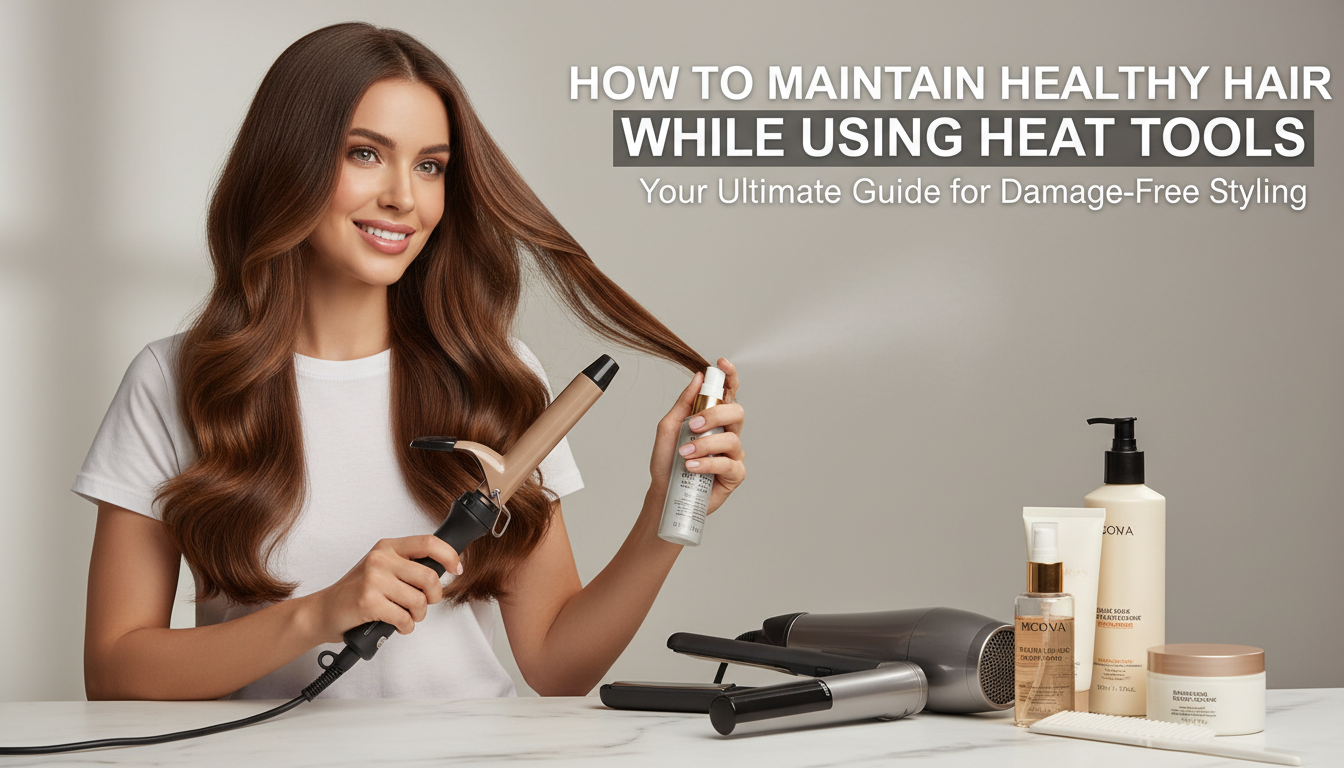
In the fast-paced world of 2026, your hair remains one of your most powerful forms of self-expression. Whether you are achieving a sleek, glass-like finish with a flat iron or creating effortless beach waves with a high-tech curling wand, heat styling has become an indispensable part of the modern beauty routine. However, the perennial challenge remains: how do you achieve these stunning looks without sacrificing the structural integrity and natural shine of your strands? For years, the trade-off was clear—style today, damage tomorrow. But as we move further into this decade, advancements in hair science and tool technology have rewritten the rules of engagement.
You no longer have to choose between a polished aesthetic and healthy hair. Today’s landscape of hair care is defined by “smart” styling. We have moved past the era of “one temperature fits all” and entered a period where thermal protection is integrated into every step of the grooming process. From bio-mimetic keratin sprays to AI-driven styling tools that monitor moisture levels 200 times per second, the resources available to you are more sophisticated than ever. Yet, technology alone is not a panacea. Maintaining hair health requires a disciplined approach, an understanding of your hair’s unique biology, and a commitment to professional-grade techniques.
This comprehensive guide serves as your definitive roadmap to navigating heat styling in 2026. We will explore the latest innovations in heat protection, evaluate the top-performing tools on the market, and provide you with a step-by-step methodology to ensure your hair remains resilient, hydrated, and vibrant. Whether you are a daily styler or an occasional user of heat, the following strategies will empower you to master your tools while preserving the long-term health of your hair. We recommend that you view your hair care routine not just as a cosmetic necessity, but as a vital investment in your overall confidence and presentation.
Table of Contents
- The Science of Heat and Hair Structure
- Evaluating the 2026 Generation of Heat Tools
- The Essential Pre-Heat Preparation Routine
- Mastering Temperature Control for Your Hair Type
- Innovative Heat Protectants: Ingredients and Formulas
- Strategic Styling Techniques to Minimize Damage
- Post-Styling Recovery and Hydration Protocols
- Identifying and Addressing Early Signs of Heat Damage
- Texture-Specific Advice: From Fine to Coiled
- The Role of Diet and Supplements in Heat Resilience
- Professional Salon Treatments Worth the Investment
- Frequently Asked Questions (FAQ)
- Key Takeaways for Healthy Thermal Styling
- Conclusion
The Science of Heat and Hair Structure
To truly master heat styling, you must first understand what happens beneath the surface of your hair when it encounters high temperatures. Your hair is primarily composed of a tough protein called keratin, held together by various chemical bonds (disulfide, hydrogen, and salt bonds). The outermost layer, the cuticle, consists of overlapping scales that protect the inner cortex.
When you apply heat, you are essentially manipulating the hydrogen bonds in your hair to temporarily change its shape. While this allows for styling, excessive heat can lead to “bubble hair”—a condition where moisture trapped inside the hair shaft turns to steam and expands, causing the hair to explode from the inside out. Furthermore, temperatures exceeding 350°F (176°C) can begin to degrade the keratin itself, leading to permanent structural weakness.
In 2026, we understand that “thermal trauma” is cumulative. Every time you pass a flat iron over a section of hair, you are subtly altering the cuticle’s ability to lie flat. If the cuticle is lifted or broken, moisture escapes, and the hair becomes porous, brittle, and prone to frizz. By understanding this biological framework, you can better appreciate why the protective measures we recommend are non-negotiable for anyone seeking to maintain a high standard of hair health.
Evaluating the 2026 Generation of Heat Tools
The market for hair tools has undergone a revolution. We have moved away from simple heating elements to sophisticated devices that prioritize “heat safety” as a core feature. When you are looking to purchase a new tool, we recommend focusing on three main categories: Infrared technology, Ceramic-Tourmaline blends, and AI-Sensored devices.
Smart Sensors and AI Integration
The most significant advancement in 2026 is the integration of real-time moisture sensors. These tools, often called “Adaptive Stylers,” use sensors in the plates or barrels to measure the hydration levels of your hair as you style. If the tool detects that the hair is becoming too dry or that the temperature is reaching a critical threshold for your specific hair density, it automatically adjusts the heat output. This prevents the “over-baking” effect that was common with older, static-temperature irons.
Infrared and Ionic Technology
Infrared heat penetrates the hair shaft more deeply and evenly than traditional conduction heat. This means you can achieve your desired style at a lower external temperature, reducing the risk of cuticle burn. Meanwhile, advanced ionic generators emit negative ions that break down water molecules, allowing for faster drying times and sealing the cuticle for a smoother, shinier finish.
| Tool Type | Primary Benefit | Recommended For |
|---|---|---|
| Adaptive AI Flat Irons | Real-time heat adjustment | All hair types, especially damaged |
| Infrared Curling Wands | Deep, gentle heating | Thick or coarse hair |
| High-Velocity Ionic Dryers | Rapid drying, less frizz | Daily blow-out enthusiasts |
The Essential Pre-Heat Preparation Routine
The foundation of healthy hair is laid long before you plug in your styling tool. We recommend a three-step preparation phase: cleansing, conditioning, and priming.
1. Targeted Cleansing
Start with a sulfate-free shampoo that focuses on moisture retention. In 2026, many leading brands have introduced “Thermal Prep” shampoos that contain amino acids which strengthen the hair’s resistance to heat during the washing process.
2. Deep Conditioning and Bonding
A standard conditioner is often insufficient if you style with heat frequently. You should utilize a bond-building conditioner or a weekly “plex” treatment. These products work at a molecular level to reinforce the disulfide bonds that heat styling can weaken. When you apply these products, ensure you leave them on for the full recommended time—usually 5 to 10 minutes—to allow for deep penetration.
3. The Priming Phase
Think of a primer as a shield. Before any heat touches your hair, you must apply a leave-in treatment. In the current year, the most effective primers are multi-functional; they detangle, provide UV protection, and offer a thermal barrier. Applying these to damp hair ensures an even distribution, which is critical for total protection.
Mastering Temperature Control for Your Hair Type
One of the most frequent mistakes you might make is using a temperature that is far too high for your specific hair needs. There is a common misconception that higher heat yields faster or better results. In reality, once you pass the “glass transition temperature” of your hair, you are causing unnecessary damage without gaining extra hold.
We recommend following a strict temperature guide based on your hair’s diameter and condition. Most professional tools in 2026 feature digital displays that allow for precision control.
| Hair Texture/Condition | Recommended Temp (°F) | Recommended Temp (°C) |
|---|---|---|
| Fine, Thin, or Chemically Treated | 250°F – 300°F | 120°C – 150°C |
| Normal, Medium Density | 300°F – 350°F | 150°C – 175°C |
| Thick, Coarse, or Resistant | 350°F – 390°F | 175°C – 200°C |
| Virgin, Extremely Coarse | 390°F – 410°F | 200°C – 210°C |
Note: You should rarely, if ever, exceed 410°F. Temperatures above this point are generally reserved for professional-only chemical straightening treatments and can cause immediate, irreversible damage to the hair fiber.
Innovative Heat Protectants: Ingredients and Formulas
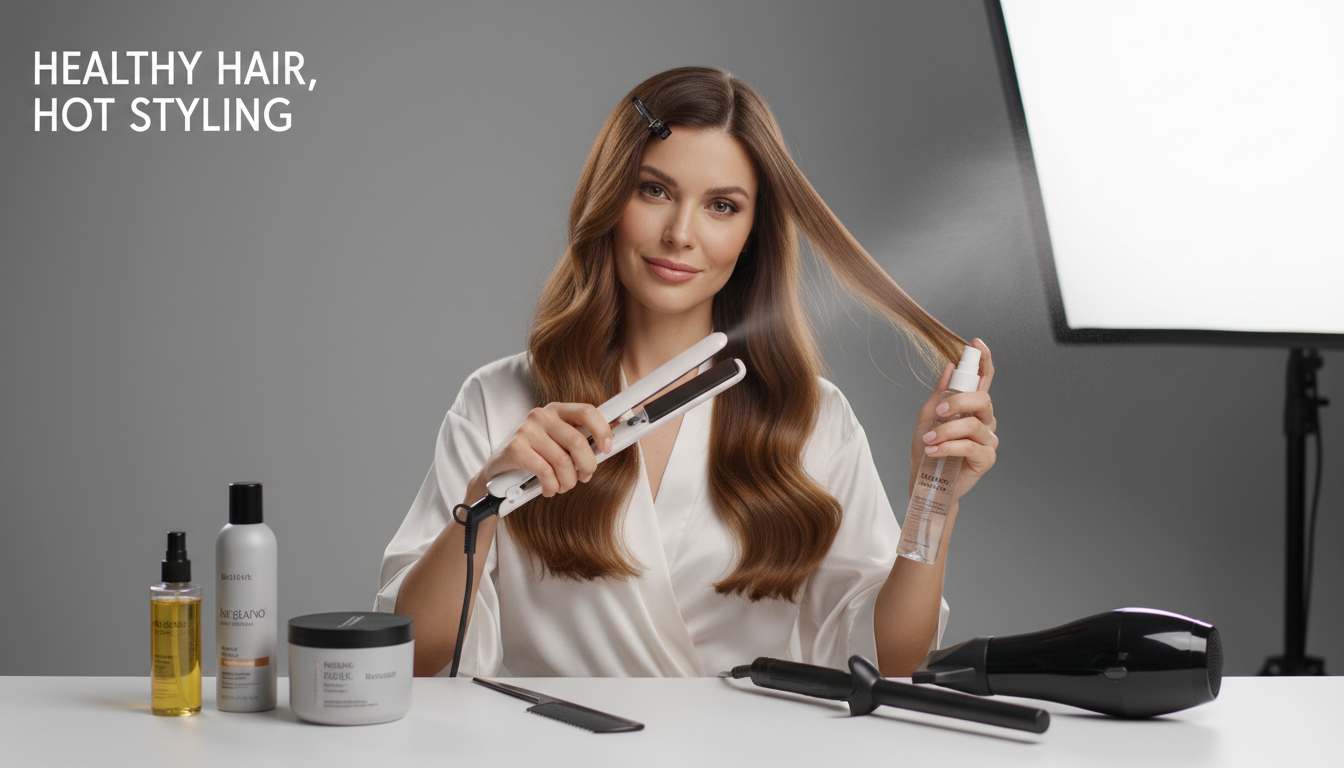
The heat protectants of 2026 are a far cry from the sticky, alcohol-heavy sprays of the past. Modern formulas utilize “encapsulation technology” to deliver protective ingredients exactly where they are needed. When you are shopping for a protectant, look for these key ingredients:
- Silicon-Polymers (VP/VA Copolymer): These create a breathable film over the hair, slowing down the conduction of heat and preventing moisture loss.
- Hydrolyzed Wheat Protein: This helps the hair maintain its elasticity under thermal stress.
- Argan and Marula Oils (Nano-refined): These provide lubrication, allowing tools to glide smoothly over the hair without snagging.
- Heat-Activated Cross-linkers: These are cutting-edge ingredients that actually strengthen the hair structure when triggered by the heat of your iron.
- Loss of Elasticity: When you pull a wet strand of hair, it should stretch and return to its original length. If it snaps immediately, the protein structure is compromised.
- Rough Texture: If your hair feels “crunchy” or like straw even after conditioning, the cuticle is likely severely damaged.
- Split Ends and White Bulbs: Small white dots at the ends of your hair indicate where the hair fiber has fractured.
- Color Fading: Heat can oxidize hair color, causing it to look dull or brassy much faster than usual.
- Omega-3 Fatty Acids: Found in fish oil and flaxseed, these help maintain the lipid barrier of the hair, providing natural lubrication.
- Biotin and Collagen: While common, modern 2026 formulations are now “bio-available,” meaning they are more easily absorbed by the body to support keratin production.
- Hydration: Water intake is crucial. Dehydrated bodies lead to dehydrated hair follicles, making the hair more brittle from the moment it grows out of your scalp.
- Always use a protectant: Never let a hot tool touch dry, unprotected hair.
- Invest in quality: 2026 technology (AI sensors, infrared) is significantly safer than older tools.
- Match temperature to texture: Lower heat for fine hair, moderate for thick.
- The “One-Pass” Rule: If you need multiple passes, your technique or temperature needs adjustment.
- Prioritize moisture: Balance every heat session with a hydrating recovery phase.
- Monitor health: Perform an elasticity test weekly to catch damage early.
We recommend applying your protectant in sections. If you simply mist the top layer of your hair, the under-layers remain vulnerable. For the best results, comb the product through from roots to ends to ensure every strand is coated.
Strategic Styling Techniques to Minimize Damage
How you use your tools is just as important as the tools themselves. Professional stylists emphasize the “Single Pass” rule. If you find that you need to run your flat iron over the same section of hair three or four times to get it straight, your temperature is either too low or your section is too thick.
The Power of Air-Drying
Whenever possible, we recommend allowing your hair to air-dry to 70-80% before using a blow dryer. This reduces the total time your hair is exposed to direct heat. In 2026, many people use “microfiber hair wraps” that significantly speed up air-drying without causing the friction and breakage associated with traditional terry cloth towels.
Sectioning and Tension
Clean sectioning allows for more efficient styling. By using clips to organize your hair, you ensure that you aren’t accidentally hitting the same section twice. Furthermore, maintaining proper tension with a heat-resistant comb while flat-ironing allows the heat to distribute evenly, meaning you can achieve a sleek look with lower temperatures and fewer passes.
“The secret to longevity in hair health isn’t avoiding heat altogether, but rather mastering the art of the ‘low and slow’ approach. Your hair is like a delicate fabric; treat it like silk, not like denim.” — Dr. Julianna Moore, Trichology Consultant (2026)
Post-Styling Recovery and Hydration Protocols
Once your styling is complete, the work of maintenance begins. Heat styling naturally de-hydrates the hair, so your post-style routine should focus on moisture replenishment.
Finishing Oils and Serums
After your hair has cooled down, apply a lightweight finishing oil. This seals the cuticle and adds a layer of shine while preventing environmental moisture (humidity) from entering the hair shaft and causing frizz. In 2026, “dry oils” have become popular because they provide the benefits of traditional oils without weighing down the style or making the hair look greasy.
Overnight Care
Your hair’s recovery often happens while you sleep. We recommend using a silk or satin pillowcase. Unlike cotton, which absorbs moisture and creates friction, silk allows the hair to glide, preserving your style and preventing the mechanical damage that can lead to split ends. For those with particularly dry hair, an “overnight bonding serum” can be applied to the ends to work its magic while you rest.
Identifying and Addressing Early Signs of Heat Damage
You must remain vigilant for the warning signs that your heat styling routine is taking a toll. Early detection is the difference between a simple deep-conditioning fix and a mandatory haircut.
Common signs of heat damage include:
If you notice these symptoms, we recommend an immediate “heat fast.” Cease all thermal styling for at least 14 days and focus exclusively on protein-rich and moisture-heavy treatments to stabilize the hair.
Texture-Specific Advice: From Fine to Coiled
Every hair type reacts to heat differently. A strategy that works for someone with pin-straight, fine hair could be disastrous for someone with type 4C coils.
Fine and Thin Hair
Your hair has a smaller cortex and is more susceptible to burning. Use the lowest possible temperature settings and prioritize volumizing heat protectants that won’t weigh the hair down. Avoid heavy oils before styling, as they can cause the hair to “fry” rather than style.
Curly and Coily Hair
Curly hair is naturally drier because the scalp’s natural oils have a harder time traveling down the spiral hair shaft. When heat styling, you must use a “tension method” with a blow dryer and a comb attachment before using a flat iron. This reduces the amount of direct contact time the iron has with the hair. We recommend using a heavy-duty cream protectant for these textures.
Coarse and Thick Hair
While your hair is more resilient, it often requires more heat to change its shape. The danger here is “residual heat”—the hair holds onto the heat long after the iron is gone. Ensure each section is fully cooled before move on to avoid overheating the core of the hair.
The Role of Diet and Supplements in Heat Resilience
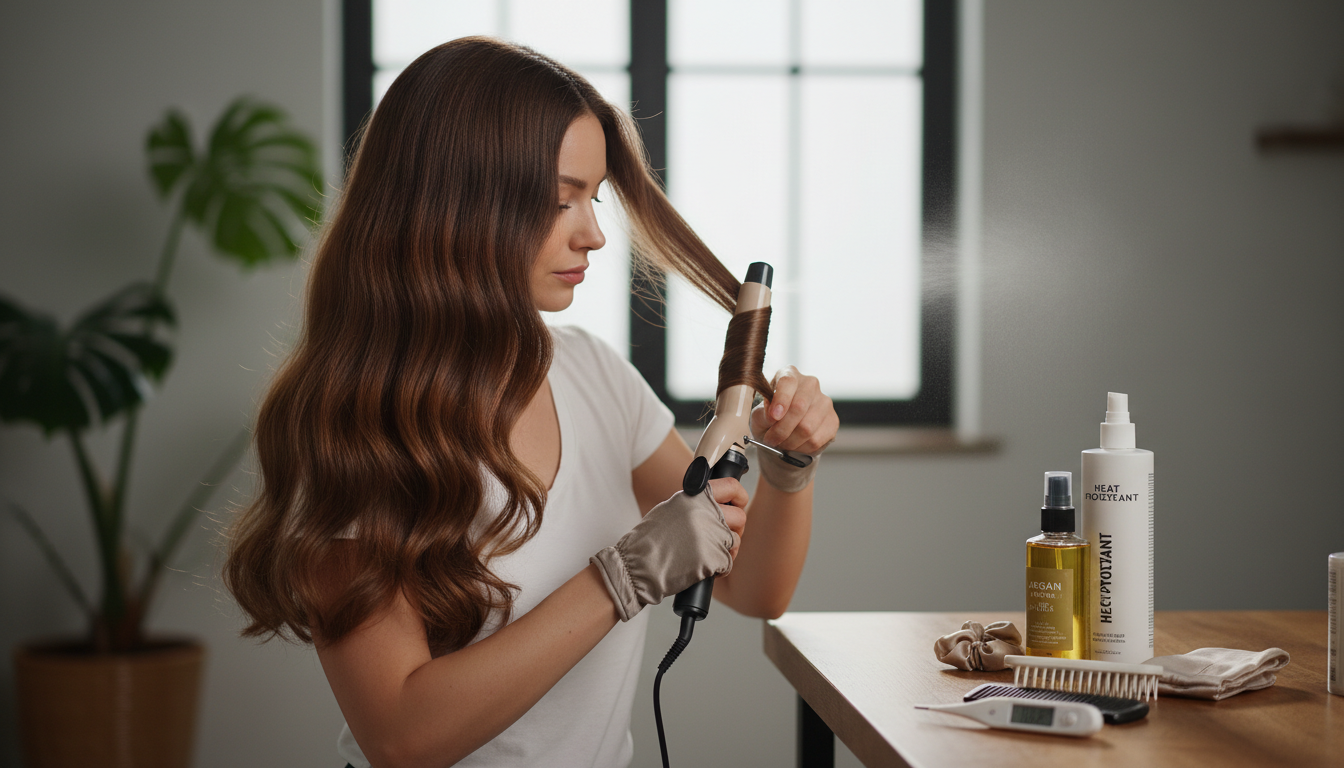
What you put into your body directly affects how your hair stands up to external stressors like heat. In 2026, the link between nutrition and hair “toughness” is well-documented.
| Nutrient | Benefit for Heat Stylers | Recommended Source |
|---|---|---|
| Silica | Improves hair strength/elasticity | Horsetail extract, Bamboo |
| Vitamin E | Protects against oxidative stress | Almonds, Spinach |
| Zinc | Assists in hair tissue repair | Oysters, Pumpkin seeds |
Professional Salon Treatments Worth the Investment
Sometimes, at-home care isn’t enough to counteract the effects of frequent heat. We recommend visiting a professional stylist every 6-8 weeks for targeted treatments.
Molecular Repair Services
Treatments like K18 or modified Olaplex (standard in 2026) use patented peptide chains to reconnect broken polypeptide chains. These aren’t just conditioners; they are “permanent” repairs that stay in the hair even after multiple washes.
Professional Glossing
A salon gloss treatment seals the cuticle with a high-shine, protective layer that can last for up to six weeks. This acts as an additional sacrificial barrier, meaning the heat from your tools will affect the gloss layer before it reaches your actual hair fiber.
The “Dusting” Technique
Ask your stylist for a “dusting” rather than a full trim. This technique removes only the very tips of damaged hair without sacrificing length, preventing split ends from traveling further up the hair shaft.
Key Takeaways for Healthy Thermal Styling
Frequently Asked Questions (FAQ)
1. Is it safe to use heat tools every day if I use a heat protectant?
Even with the best protectants, daily heat styling is not recommended. The cumulative stress on the keratin structure can lead to “weathering.” We suggest limiting heat styling to 2-3 times per week and utilizing heatless styling methods (like silk rollers or braids) on the off-days.
2. Can I use a flat iron on slightly damp hair?
Absolutely not. This is one of the most damaging things you can do. Using a flat iron on damp hair causes the water to boil instantly, creating steam that gets trapped inside the hair shaft and explodes the cuticle (bubble hair). Your hair must be 100% dry before using a flat iron or curling wand.
3. How do I know if my heat protectant is actually working?
A good sign of a working protectant is that your hair feels soft, not scorched, after styling. You can also perform a “toast test” (though not on your hair): apply protectant to one half of a piece of white bread and toast it; the protected side will be significantly less charred. In a professional sense, if your hair maintains its color and doesn’t develop split ends over a month of styling, your product is effective.
4. Are expensive “AI” hair tools really worth the money in 2026?
Yes. The difference lies in the consistency of the heat. Cheaper tools often have “hot spots” where the temperature spikes far above the setting on the dial. AI-controlled tools maintain a steady, safe temperature that significantly reduces the risk of accidental burning.
5. Does the material of the tool (Ceramic vs. Titanium) matter?
Yes. Ceramic plates heat from the inside out and are generally gentler, making them ideal for fine or damaged hair. Titanium plates heat up faster and reach higher temperatures, which is better for thick, coarse, or “stubborn” hair that is difficult to style.
6. Can I reverse heat damage once it has happened?
True heat damage, where the protein structure is melted or the cuticle is missing, cannot be fully reversed. However, in 2026, molecular repair treatments can “patch” the damage and restore functionality to the hair, making it look and feel healthy until it grows out and can be trimmed.
7. Should I change my heat styling routine based on the season?
Yes. In the winter, your hair is naturally drier due to indoor heating, so you should increase your use of leave-in conditioners. In the summer, the UV rays from the sun add an extra layer of heat stress, so using a protectant with UV filters is essential.
Conclusion
As we navigate the beauty landscape of 2026, it is clear that the relationship between heat styling and hair health has evolved from one of conflict to one of synergy. You have at your disposal an incredible array of technologies and formulations designed to protect, repair, and enhance your hair. However, the most important tool in your arsenal is knowledge. By understanding the science of your hair, respecting the limits of its thermal tolerance, and maintaining a rigorous care routine, you can enjoy the versatility of heat styling without compromising the vitality of your strands.
We recommend that you approach your hair care with the same intentionality you apply to your skincare. Consistency is the key. A single pass with a flat iron might not cause noticeable damage, but the cumulative effect of a year’s worth of styling certainly will. By following the protocols outlined in this guide—investing in smart tools, using high-quality protectants, and prioritizing post-style recovery—you ensure that your hair remains a glowing reflection of your health and style.
Remember, beautiful hair is healthy hair. In 2026, the “perfect style” is no longer defined just by the shape or the hold, but by the undeniable shine and strength that only comes from a well-protected and nurtured head of hair. Stay mindful of your techniques, listen to what your hair is telling you, and continue to prioritize the long-term integrity of your tresses. With the right approach, you can truly have the best of both worlds: stunning, high-fashion styles and the resilient, radiant hair of your dreams.