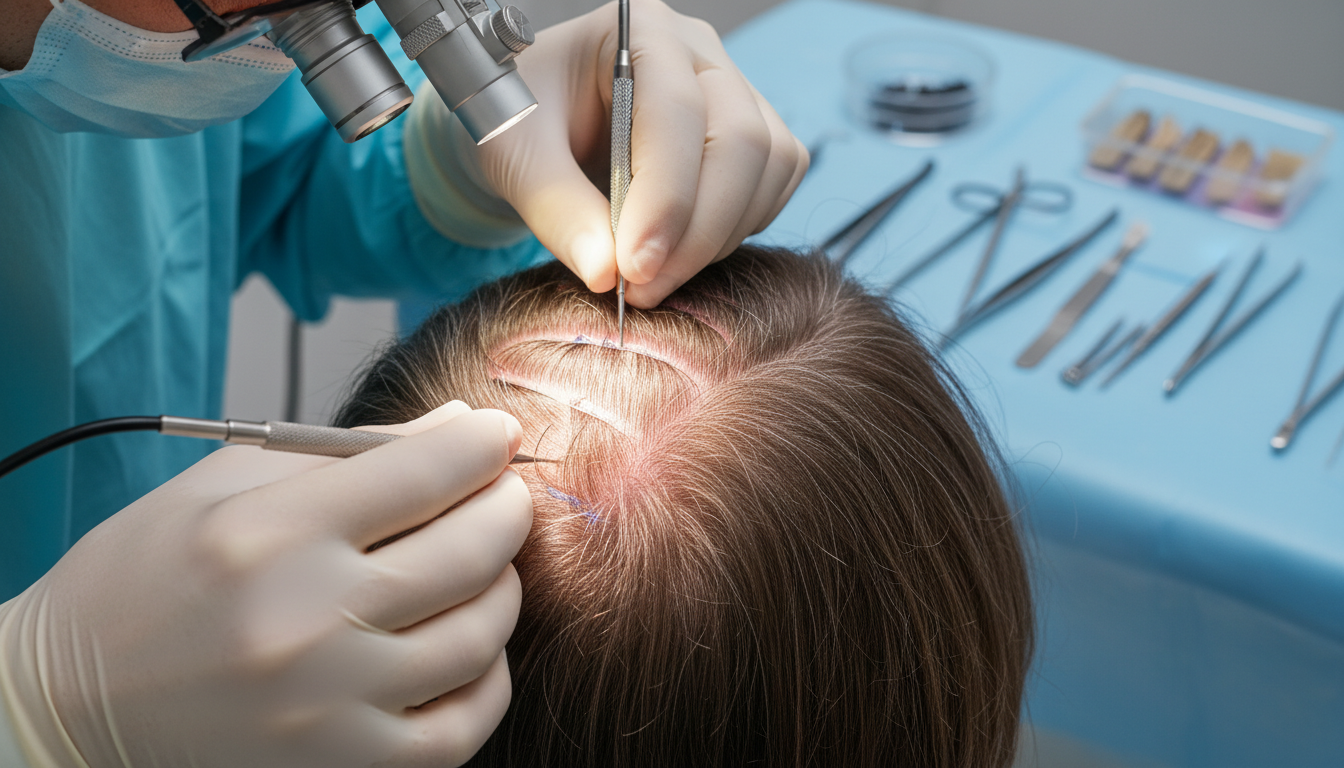
As you navigate the landscape of modern aesthetics in 2026, you will find that hair restoration has evolved from a stigmatized “plug” procedure into a sophisticated blend of microsurgery and artistic design. For many individuals in the United States, hair loss is more than a cosmetic concern; it is a shift in identity that can impact professional confidence and personal well-being. Today, the technology available to you is more precise than ever, with AI-driven graft analysis and robotic assistance becoming the gold standard in top-tier clinics. However, the abundance of choices also introduces complexity. Choosing the wrong path can lead to unnatural results or, worse, the permanent depletion of your limited donor hair.
When you begin considering a hair transplant, you are not just buying a service; you are investing in a permanent change to your physiology. This comprehensive review will guide you through the critical factors you must evaluate to ensure your journey is safe, successful, and yields the natural-looking density you desire. From understanding the nuances of different surgical techniques to evaluating the credentials of your surgical team, every detail matters. We will explore the physiological requirements for a successful graft, the financial realities of high-quality care, and the rigorous post-operative discipline required to protect your investment.
In this guide, we provide a deep dive into the 2026 standards of hair restoration. Whether you are in the early stages of thinning or looking to correct a previous procedure, you will find the practical advice and expert insights necessary to make an informed decision. We recommend that you treat this process with the same level of scrutiny you would apply to any major medical intervention. By the end of this evaluation, you will have a clear roadmap of what to look for, what to avoid, and how to prepare for the transformation ahead.
Table of Contents
- Evolution of Hair Restoration Techniques in 2026
- Selecting Your Surgeon: Credentials and Artistic Vision
- The Role of AI and Advanced Technology in Modern Clinics
- The Critical Importance of the Initial Consultation
- Donor Area Management: Protecting Your “Bank Account”
- Pre-Operative Preparation: Setting the Stage for Success
- The Procedure Day: A Step-by-Step Walkthrough
- Post-Operative Care: The First 14 Days and Beyond
- Growth Timelines and Managing Long-Term Expectations
- Cost vs. Value: Analyzing the Financial Investment
- Future Trends and Maintaining Your Results
- Key Takeaways Box
- Frequently Asked Questions (FAQ)
1. Evolution of Hair Restoration Techniques in 2026
In the current year of 2026, the primary methods of hair transplantation have reached a level of refinement where “detectability” is almost zero when performed correctly. You should be familiar with the three main pillars of modern restoration: Follicular Unit Extraction (FUE), Direct Hair Implantation (DHI), and Robotic-Assisted Surgery.
Follicular Unit Extraction (FUE) with Sapphire Blades
The FUE method remains the most popular choice for patients in the United States. In 2026, the use of Sapphire blades—made from precious gemstone rather than stainless steel—has become the standard. When you opt for Sapphire FUE, you benefit from V-shaped incisions that are smaller and more precise. This leads to less tissue trauma, reduced bleeding, and a significantly faster healing process. The primary advantage is the ability to create higher density because the incisions can be placed closer together.
Direct Hair Implantation (DHI)
DHI is often recommended if you are looking for maximum density or if you prefer not to shave your entire head. Using a specialized tool known as the Choi Implanter Pen, the surgeon extracts the follicles and implants them directly into the recipient area without the need for pre-made channels. This technique minimizes the time the hair follicles spend outside your body, which we have found significantly improves the survival rate of the grafts.
Robotic and AI-Assisted Systems
The integration of Artificial Intelligence in 2026 has revolutionized the extraction phase. Robotic systems now use advanced algorithms to identify the healthiest follicular units and calculate the optimal angle of extraction to avoid transection (damaging the bulb). While the robot performs the “heavy lifting” of extraction, the most successful outcomes still require a human surgeon’s artistic touch to design the hairline and determine the direction of growth.
| Feature | Sapphire FUE | Direct Hair Implantation (DHI) | Robotic-Assisted |
|---|---|---|---|
| Best For | Large areas / High density | Partial thinning / No-shave | Precise extraction / Consistency |
| Recovery Time | 7-10 Days | 5-7 Days | 7-10 Days |
| Scarring | Minimal (Micro-dots) | Virtually none | Minimal (Micro-dots) |
| Graft Survival | High | Very High | High |
2. Selecting Your Surgeon: Credentials and Artistic Vision
The most critical factor in your hair transplant journey is not the machine used, but the hands that guide it. We recommend that you look beyond marketing brochures and focus on two specific areas: medical credentials and the “artistic eye.”
Board Certification and Specialization
In the United States, you should verify that your surgeon is a member of the American Board of Hair Restoration Surgery (ABHRS) or similar international bodies. A general plastic surgeon may be skilled, but hair restoration is a highly specialized field that requires a deep understanding of scalp anatomy and hair exit angles. You should ask your surgeon how many procedures they personally perform per day. We suggest choosing a clinic where the lead surgeon is involved in the entire process, rather than delegating the entire surgery to technicians.
The Portfolio Review
When you examine “Before and After” photos, do not just look at the overall improvement. You should look for consistency in the hairline design. Is the hairline too straight? Does it look “pluggy”? In 2026, a world-class result is one that mimics the irregularities of nature. A skilled surgeon will use single-hair grafts for the very front of the hairline and multi-hair grafts further back for volume. If all the patients in a portfolio have the exact same hairline shape, it is a sign that the surgeon uses a “cookie-cutter” approach rather than tailoring the design to individual facial structures.
3. The Role of AI and Advanced Technology in Modern Clinics
As of 2026, technology has moved past simple magnification. When you enter a high-end clinic, you should expect to see diagnostic tools that were unavailable just five years ago.
AI-Driven Trichoscopy
Before a single hair is moved, advanced AI software now analyzes your scalp. It measures your hair density (follicles per square centimeter), the thickness of individual hair shafts, and the percentage of hairs in the telogen (resting) phase versus the anagen (growth) phase. This data allows your surgeon to predict exactly how many grafts can be safely moved without thinning out your donor area—a process often referred to as “over-harvesting.”
Follicle Preservation Solutions
The survival of the graft depends on what happens during the “out-of-body” time. In 2026, leading clinics use storage solutions enriched with ATP (adenosine triphosphate) and antioxidants. These solutions mimic the natural environment of the body, keeping the cells alive and energetic while they wait to be transplanted. We recommend asking your clinic what type of holding solution they use; if they only use standard saline, they may not be utilizing the latest advancements in graft survivability.
4. The Critical Importance of the Initial Consultation
You should never agree to a surgery based solely on a phone call or a few photos sent via an app. A formal consultation—either in person or via a high-definition video link—is where the strategy for your future look is built.
Evaluating Your Hair Loss Pattern
Your surgeon must determine if your hair loss has stabilized. If you are under the age of 25, we often recommend waiting or starting medical therapy first. Performing a transplant while you are still actively losing hair can result in an “island” of transplanted hair surrounded by a receding natural hairline, necessitating further corrective surgeries.
Managing Your Expectations
During the consultation, a professional surgeon will be honest about what can be achieved. If you have advanced thinning (Norwood Scale 6 or 7) and a limited donor area, you cannot expect the thick mane of a teenager. You should be wary of any clinic that promises 100% restoration of your original density. The goal in 2026 is the illusion of density and a natural frame for your face.
Expert Quote: “The success of a hair transplant is measured not by how much hair you add, but by how well you manage the finite resource of the donor area for the patient’s entire lifetime.” – Dr. Aris Hamilton, 2026 Clinical Director of American Hair Sciences.
5. Donor Area Management: Protecting Your “Bank Account”

You must view your donor area—the hair on the back and sides of your head—as a non-renewable bank account. Once a follicle is moved, it does not grow back in the original spot.
Avoiding Over-Harvesting
In the past, some clinics would take too many grafts in a single session to achieve a “dense” look quickly. This often resulted in a “moth-eaten” appearance in the back of the head. In 2026, ethical surgeons use a “scattered” extraction pattern, ensuring that the remaining hair provides enough coverage to hide the extraction sites.
Body Hair Transplantation (BHT)
If your scalp donor area is weak, you might consider BHT. Modern techniques allow surgeons to use hair from the beard or chest as “filler” to add volume behind a hairline created with scalp hair. While beard hair is typically thicker and has a different growth cycle, it can be an excellent resource when managed by an expert.
| Donor Resource | Typical Graft Count | Characteristics |
|---|---|---|
| Occipital (Back of head) | 4,000 – 6,000 | Highest quality, permanent |
| Temporal (Sides) | 1,500 – 2,500 | Finer hair, good for hairlines |
| Beard Area | 1,000 – 3,000 | Thick, excellent for crown volume |
| Chest/Body | 500 – 2,000 | Variable growth cycles, last resort |
6. Pre-Operative Preparation: Setting the Stage for Success
When you have selected your clinic and set a date, your preparation begins weeks in advance. Following these guidelines is essential for minimizing complications and ensuring the grafts take hold.
Medical Clearances and Blood Work
Even though it is a minimally invasive procedure, you will need a full blood panel to check for underlying conditions that might affect healing or anesthesia. In 2026, clinics are particularly focused on your Vitamin D and Iron levels, as deficiencies in these can slow down the growth of new grafts.
Lifestyle Adjustments
We recommend that you stop smoking and consuming alcohol at least two weeks before your procedure. Nicotine constricts blood vessels, reducing the oxygen supply to the scalp, which is the “fuel” your new grafts need to survive. You should also discuss any supplements you are taking, such as Vitamin E or fish oil, as these can increase bleeding during the surgery.
Scalp Preparation
In some cases, your surgeon may recommend a specific regimen of Minoxidil or Finasteride months before the surgery to strengthen existing hairs and stabilize the area. However, you are usually asked to stop these a week before the actual surgery to prevent excessive blood flow to the skin during the procedure.
7. The Procedure Day: A Step-by-Step Walkthrough
Knowing what to expect can alleviate much of the anxiety associated with surgery. A typical session in 2026 lasts between 6 to 10 hours, depending on the number of grafts.
Step 1: Local Anesthesia
The only uncomfortable part of the day is the initial numbing. Most top-tier US clinics now use “needle-free” anesthesia systems that use high-pressure air to deliver the numbing agent, followed by traditional local anesthesia once the skin is partially desensitized.
Step 2: Extraction
During this phase, you will likely be lying on your stomach or side. The surgeon or the robotic arm will carefully remove the follicular units. You should feel no pain, only a slight pressure or a “tapping” sensation.
Step 3: Graft Sorting and Quality Control
As the grafts are removed, a team of technicians uses high-powered microscopes to sort them. They categorize them into “singles” for the hairline and “multiples” for the crown. In 2026, many clinics use AI-assisted cameras to verify the health of each bulb before it is approved for implantation.
Step 4: Implantation
This is the most artistic phase. The surgeon creates the channels (in FUE) or uses the implanter pen (in DHI) to place each hair. They must consider the angle (usually 15-45 degrees), the direction (following your natural whorl), and the depth. If the graft is placed too deep, it can cause “pitting”; if too shallow, it won’t survive.
8. Post-Operative Care: The First 14 Days and Beyond
Your work begins the moment you leave the clinic. The first two weeks are the “critical window” where the grafts are still fragile and haven’t fully anchored into the scalp.
The First 72 Hours: The “Hands-Off” Rule
You must not touch, scratch, or wash the recipient area for the first three days. The grafts are essentially “resting” in small droplets of blood and tissue fluid. Any friction can dislodge them. You will be advised to sleep with your head elevated at a 45-degree angle to minimize swelling.
The Washing Protocol
Around day four, you will begin a very gentle washing routine using a specialized foam shampoo. You should not let the showerhead spray directly onto your head; instead, use a cup to gently pour lukewarm water over the area. This helps to soften the scabs that have formed.
Activities to Avoid
- Exercise: No heavy lifting or cardio for at least 14 days. Increased blood pressure can cause the grafts to “pop” out.
- Sun Exposure: You must protect your scalp from the sun for at least six months. Sunburn on a healing scalp can permanently damage the new follicles and cause pigmentation issues.
- Smoking: Continued abstinence from smoking is vital for at least a month post-op to ensure proper blood flow to the healing tissue.
9. Growth Timelines and Managing Long-Term Expectations
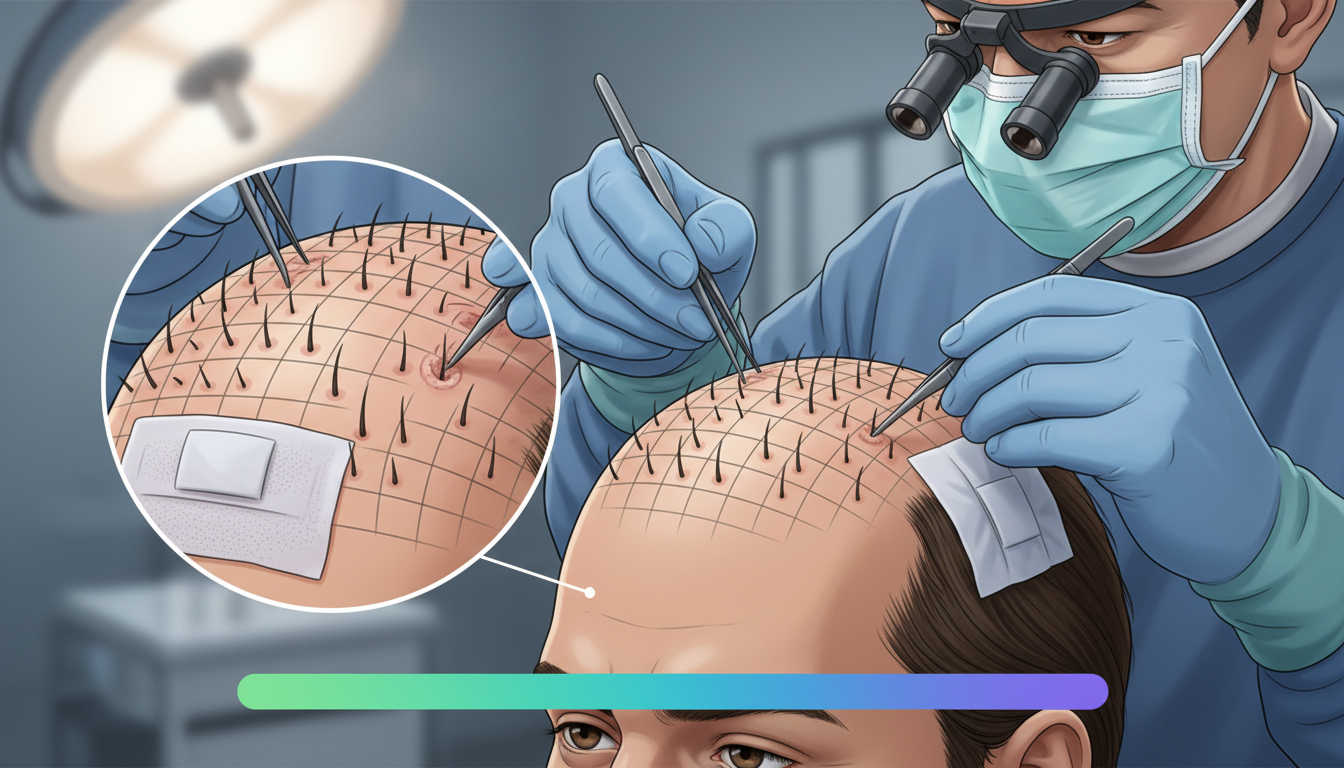
One of the most challenging aspects of hair restoration is the “waiting game.” You will not see your final results for at least a year, and in 2026, we tell patients to wait up to 18 months for the full maturation of the hair.
The “Ugly Duckling” Phase (Weeks 3-8)
Do not panic when your newly transplanted hair falls out. This is a normal physiological process called “shock loss.” The hair shaft falls out, but the follicle remains alive and enters a resting phase. During this time, your scalp may look much like it did before the surgery, often with some lingering redness.
The First Growth (Months 3-6)
You will start to see fine, “baby-like” hairs emerging. They may be thin and slightly curly or wiry at first. This is because the skin is still healing, and the hair is pushing through for the first time.
Maturation (Months 12-18)
By the one-year mark, about 80-90% of the hair should have grown in. Over the following six months, the hair shafts will thicken, and the texture will normalize, blending seamlessly with your native hair.
| Timeline | What to Expect | Your Action Plan |
|---|---|---|
| Day 1-10 | Scabbing and redness | Follow washing protocol strictly |
| Week 3-8 | Shedding of transplanted hair | Stay patient; this is normal |
| Month 3-4 | New sprouts appear | Avoid harsh chemicals/dyes |
| Month 6 | 40-50% growth visible | First “styling” possible |
| Month 12 | 90% results achieved | Evaluation with your surgeon |
| Month 18 | Final density and texture | Long-term maintenance check |
10. Cost vs. Value: Analyzing the Financial Investment
In the United States, the cost of a high-quality hair transplant in 2026 ranges significantly. While it may be tempting to look for the lowest price, especially with “medical tourism” options, you must weigh the risks.
Understanding the Pricing Models
Most clinics charge either a “per graft” fee or a “flat session” fee. In the US, prices typically range from $4 to $10 per graft. A 2,500-graft procedure might cost anywhere from $10,000 to $25,000. This price should include the surgeon’s time, the specialized staff, the facility fees, and the post-operative care package.
Why “Cheap” Can Be Expensive
We have seen an increase in patients seeking “repair” surgeries in 2026. These are individuals who went to “hair mills”—clinics that perform 10-20 surgeries a day with little surgeon involvement. Repairing a botched transplant is often twice as expensive as doing it right the first time, and it is limited by the remaining donor hair. When you pay for a premium clinic, you are paying for the security that your donor area will be managed with a lifetime perspective.
Financing and Insurance
Most hair transplants are considered elective cosmetic procedures and are not covered by health insurance. However, many clinics now offer specialized medical financing plans that allow you to pay for the procedure over 24 to 48 months.
11. Future Trends and Maintaining Your Results
As we look toward the later half of the decade, hair restoration is becoming a holistic field. A transplant is often just one part of a larger hair-health strategy.
Exosome Therapy and PRP
In 2026, many surgeons combine the transplant with Exosome therapy. Exosomes are tiny vesicles that facilitate communication between cells. When applied during surgery, they can accelerate healing and “jumpstart” the follicles into the growth phase. Platelet-Rich Plasma (PRP) remains a staple for maintaining the health of your non-transplanted hair.
The Role of Genetics
Genetic testing has become common. Before your surgery, you might take a DNA test that predicts how sensitive your hair is to DHT (dihydrotestosterone). This information helps your doctor prescribe the exact dosage of preventative medication you need to keep your remaining natural hair, ensuring the transplant doesn’t become an “isolated island” in the future.
Robotic Maintenance
We are seeing the rise of home-based laser therapy devices that are much more powerful than previous versions. Using these for 10 minutes a day can help maintain the scalp’s vascular health, supporting both your new and old hair.
Key Takeaways Box
Before Your Procedure:
– Verify Credentials: Ensure ABHRS or equivalent certification.
– Analyze the Portfolio: Look for natural, irregular hairlines.
– Don’t Rush: Stabilize your hair loss medically before surgery.
– Plan Your Budget: Account for the procedure and long-term maintenance.
> During and After:
– Prioritize the Donor Area: Never over-harvest for short-term density.
– Follow the Protocol: The first 14 days determine the success of the next 20 years.
– Manage Expectations: Results take 12-18 months to fully mature.
– Lifestyle Matters: Smoking and sun exposure are your biggest enemies.
Frequently Asked Questions (FAQ)
Q: Is a hair transplant permanent?
A: Yes. The hair taken from the back and sides of the head is genetically resistant to the hormones that cause balding. When moved to the top of the head, it retains this resistance. However, your non-transplanted hair may still fall out over time, which is why maintenance therapy is often recommended.
Q: Does the procedure hurt?
A: With the 2026 numbing techniques, the procedure itself is painless. You can watch movies, listen to podcasts, or even nap. There may be some soreness and a “tight” feeling in the scalp for 3-5 days after the surgery, which is usually managed with mild over-the-counter pain relievers.
Q: How long do I need to take off from work?
A: If you have a desk job, you can technically return to work in 3-5 days. However, many patients prefer to take 7-10 days off until the scabbing has cleared and the initial swelling has subsided, especially if they wish to keep the procedure private.
Q: Can I get a transplant if I am completely bald?
A: If you have no hair on the back and sides of your head, a traditional transplant is not possible because there is no donor source. In 2026, we explore options like BHT (Body Hair Transplant) or advanced scalp micropigmentation for such cases, but results will vary.
Q: Will people be able to tell I had a transplant?
A: With modern Sapphire FUE or DHI techniques, the results are virtually undetectable. The key is the “irregular” hairline design. If the surgeon follows the natural “macro and micro” irregularities of a real hairline, even a barber will have a hard time noticing the grafts once they are fully grown.
Q: Can I use my friend’s or a relative’s hair?
A: No. Like any organ transplant, your body would reject foreign hair unless you took lifelong anti-rejection medications, which are far too risky for a cosmetic procedure. You must be your own donor.
Q: At what age is it best to get a transplant?
A: While there is no “perfect” age, we generally recommend waiting until at least 25-27. This allows your hair loss pattern to become more predictable. If you transplant too early, you may run out of donor hair if your loss continues aggressively into your 30s.
Conclusion
A hair transplant in 2026 is a remarkable marriage of science and artistry. When you approach this procedure with a well-informed perspective, it can be one of the most rewarding investments you make in yourself. The key to a successful outcome lies in your patience and your due diligence. You must prioritize the long-term health of your scalp over the desire for an instant “fix.”
We recommend that you begin your journey by consulting with multiple board-certified specialists. Ask the difficult questions about donor management, AI integration, and their specific artistic philosophy. Remember that the best transplant is the one that no one knows you had. By following the pre-operative and post-operative protocols meticulously, you ensure that your new hair has the best possible environment to thrive.
Hair restoration is no longer just about “filling a hole.” It is about restoring your silhouette, framing your face, and giving you the freedom to style your hair without anxiety. As technology continues to advance, the boundaries of what is possible expand, but the core principles of medical ethics and surgical skill remains the foundation of every successful transformation. You have the tools and the information; now, take the time to choose the path that is right for your unique needs and goals.